Why Can’t You Install a Lift Near Cracks or Saw Cuts?
This comes up pretty often when we are laying out a two-post lift.
The lift fits in the bay. The ceiling height works. Everything looks good until we start laying out the columns and find that one of the anchors would land too close to a crack, saw cut, control joint, expansion joint, or edge of the concrete.
At that point we sometimes have to move the lift or address the concrete before we can install it.
So why does a crack or saw cut matter?
It Comes Down to the Anchors
A two-post lift relies on anchors installed into the concrete slab to secure each column.
Those anchors need enough sound concrete around them to develop the holding strength required by the lift manufacturer. When an anchor is installed too close to an edge, crack, or joint, there may not be enough continuous concrete surrounding the anchor.
That is why lift manufacturers specify minimum distances between anchors and these areas.
For example, Challenger requires the anchors on many of its two-post lifts to be installed a minimum distance from any crack, edge, or expansion joint.
The exact requirement depends on the lift, so we always follow the installation instructions for the specific model being installed.
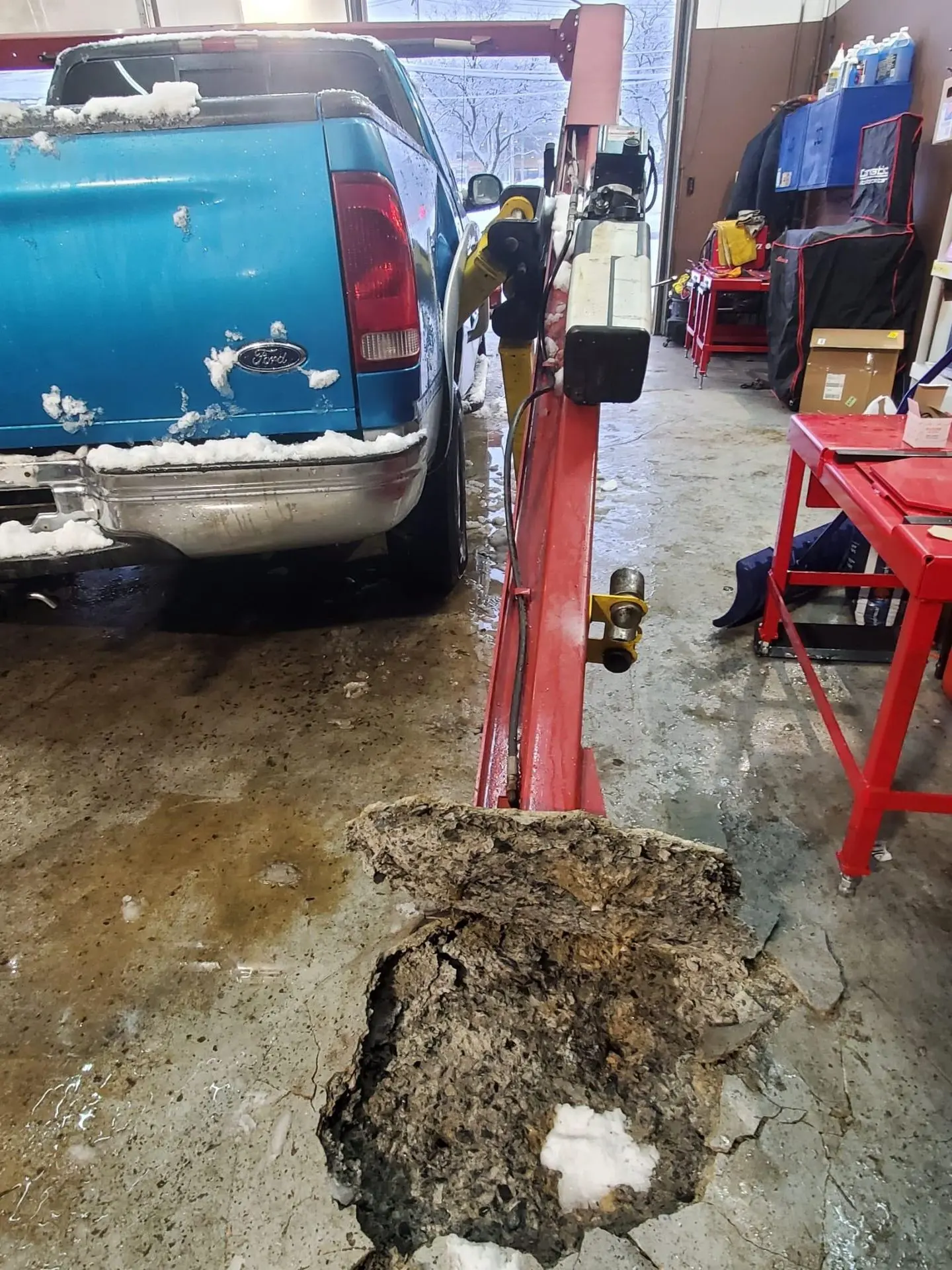
What About Saw Cuts?
A saw cut may look harmless.
In many concrete floors, saw cuts are intentionally placed control joints designed to give the slab a controlled location to crack as it cures and moves.
That is exactly why we cannot simply drill an anchor beside one and assume everything underneath is solid and continuous.
If the lift manufacturer requires a certain distance from a crack or joint, a saw cut in that area has to be taken into consideration when laying out the lift.
Does Every Crack Mean the Concrete Is Bad?
No.
Concrete cracks. A small crack does not automatically mean your entire floor is defective or that a lift cannot be installed in the building.
What matters is where the crack is in relation to the lift columns and anchors, along with the thickness, strength, condition, and construction of the slab.
Sometimes moving the lift a few inches solves the problem.
Other times it doesn't.
What Happens If the Concrete Doesn't Work?
If the existing slab does not meet the lift manufacturer's requirements, we have a few options depending on the situation.
The lift may be able to be repositioned.
If that isn't practical, the affected concrete can sometimes be removed and new concrete poured specifically for the lift installation.
We run into this regularly in older shops, renovations, and buildings that were never designed with automotive lifts in mind.
It is much easier to deal with this before the installers arrive with the lift than after the columns are already standing in the bay.
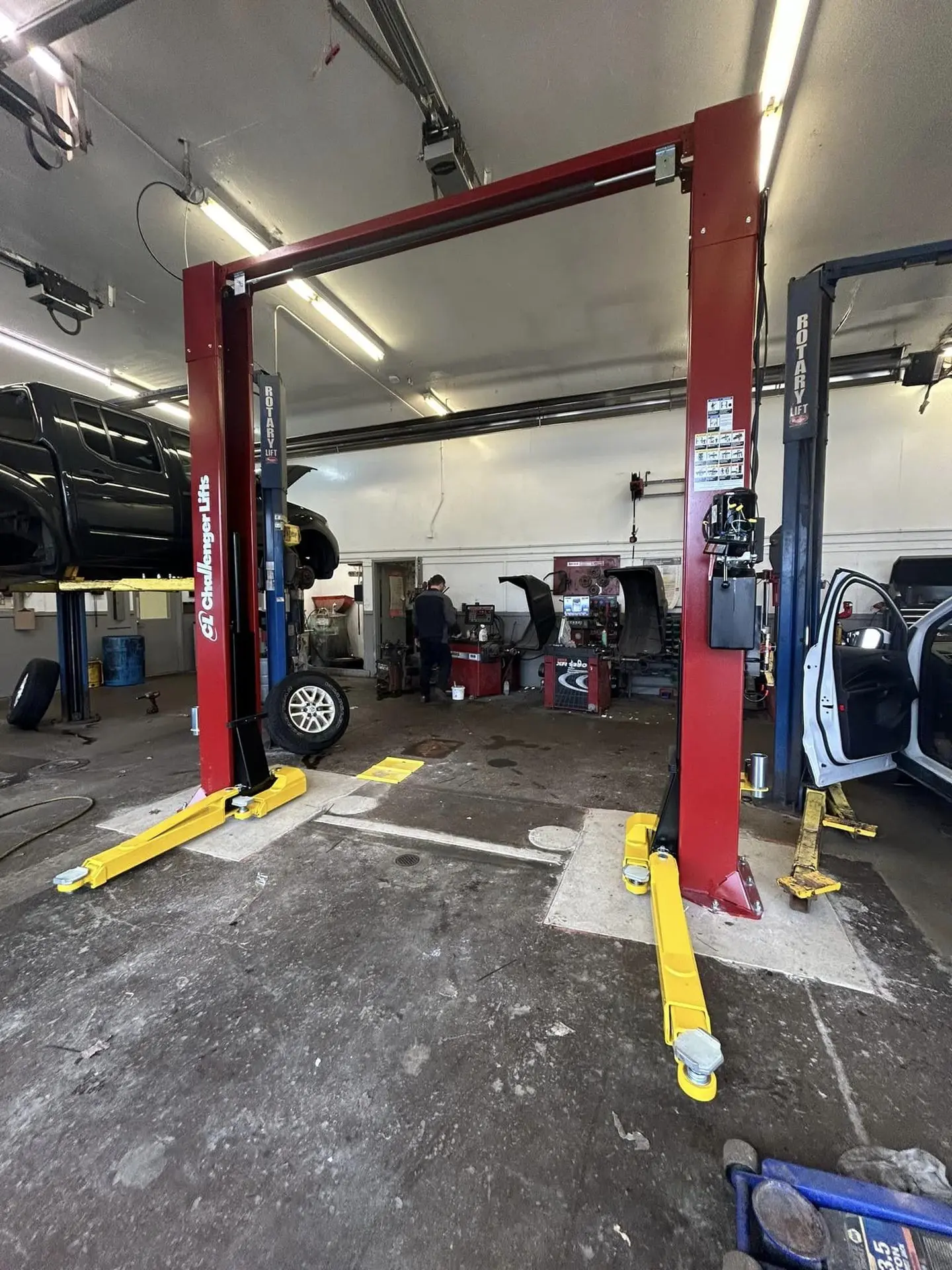
Have the Floor Looked at Before Installation
If you're planning a two-post lift and have cracks, saw cuts, an unusual concrete floor, or simply don't know how thick your slab is, tell us before the installation.
We would rather identify a concrete issue ahead of time and figure out the right solution than install a lift somewhere it shouldn't be.
Northcoast Equipment Specialists provides automotive lift sales, installation, and service throughout Northeast Ohio.
Why can't you install a lift near cracks or saw cuts?